
You've got a cracked, slippery concrete deck around the pool, or you're planning the pool itself and trying to figure out what the deck around it is actually going to cost. Nobody posts real numbers online, so here's what actually moves the price of a paver pool deck in Orlando and Central Florida, and roughly what range you should expect before you call anyone.
What Actually Drives the Price
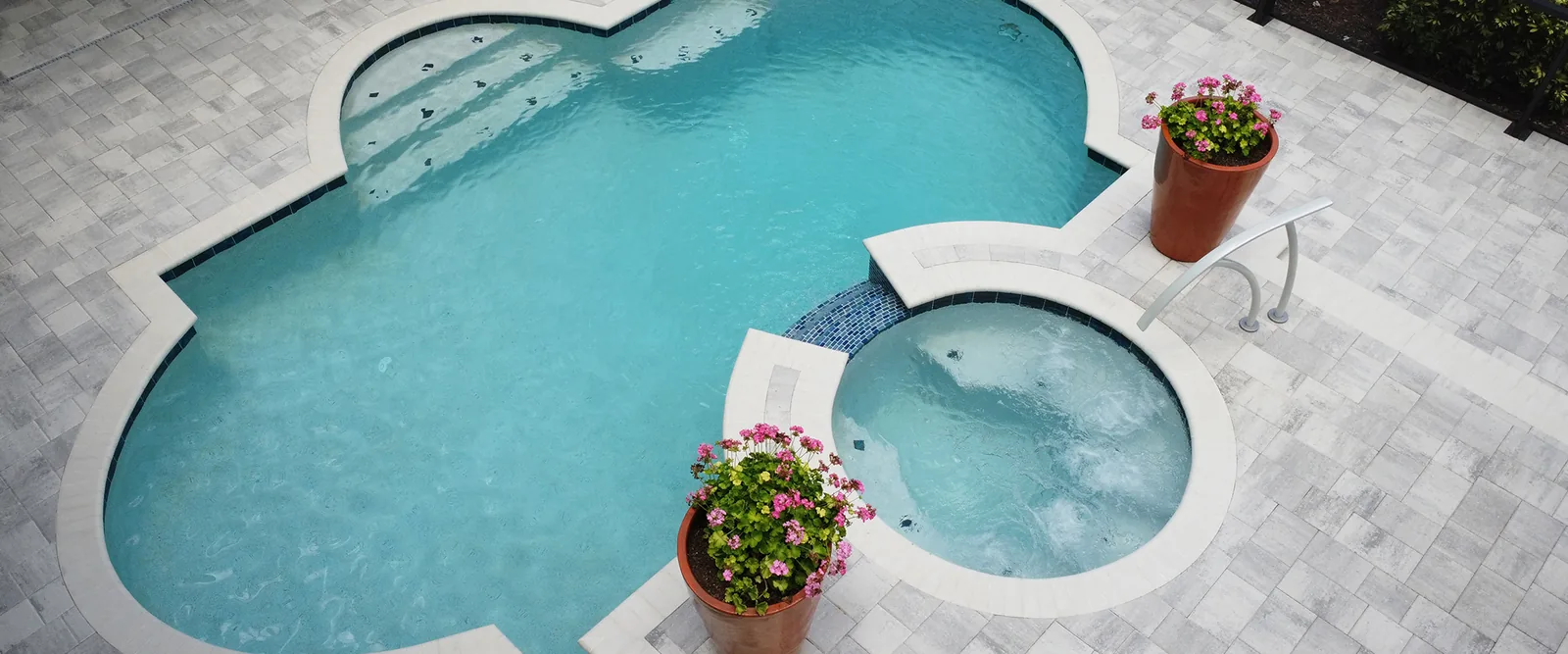
Square footage is the obvious factor, but it's not the only one. A pool deck isn't a flat rectangle — it wraps around curves, steps down to a spa, and butts up against coping at the water's edge. More cuts and tighter curves mean more labor per square foot than a straight driveway of the same size. The base underneath matters just as much: proper compaction and drainage around a pool takes more care than a driveway base, because the deck has to shed water away from the pool instead of letting it pool back toward the structure.
Removing an old concrete deck before installing pavers is its own line item. Demo, haul-off, and disposal of a cracked slab around a pool add real cost before a single paver goes down — that's separate from the install itself.
Typical Cost Ranges
Paver pool decks in Florida typically run in the range of roughly $16–$28 per square foot installed, depending on the paver style, the amount of cutting and border work, and whether an old surface needs to be removed first. A small deck with a simple layout lands toward the lower end. A larger deck with a lot of curves, steps, or a coping detail at the water's edge pushes toward the higher end. These are typical market ranges, not a quote — the only way to get an exact number for your yard is a free on-site estimate, because pool shape and current surface condition change the math every time.
Travertine-Look Pavers vs. Standard Pavers
Travertine-look pavers — the pale, textured style you see around a lot of Central Florida pools — usually cost more per square foot than a standard concrete paver in a solid color. Part of that is the material, part of it is that these styles are chosen specifically for pool decks because they stay cooler underfoot in direct sun than darker, denser pavers. If keeping the deck comfortable to walk on barefoot in July matters to you, that's the upgrade worth asking about when you get your number.
What a Proper Install Includes
- Base prep and compaction — the part that decides whether the deck stays flat or starts rocking underfoot in a year or two.
- Drainage graded away from the pool — so afternoon downpours run off instead of pooling against the coping.
- Cutting and fitting around the pool shape — curves, steps, and any spa or fire feature the deck has to wrap around.
- Pressure washing as the finishing step — every install ends with the surface cleaned, not left dusty from the cut lines.
Ways to Keep the Number Reasonable
- Simpler layouts with fewer curves and cuts cost less than intricate patterns — worth weighing if budget is the priority over a specific look.
- Phasing a large deck in sections is sometimes an option if the whole project doesn't need to happen at once.
- Reusing sound existing concrete as a sub-base (where it's actually sound) can lower demo cost — but this only works when an installer checks the slab first, not by default.
- Getting one real number instead of guessing from online ranges is still the fastest way to know what your specific deck will run.
We install Flagstone Pavers — made in Brooksville, Florida.
Want a real number for your pool deck instead of a guess? Send a couple photos and the rough size, or just call — free estimate, no pressure.