
You're standing over a cracked driveway or a patio slab stained gray-green, trying to decide whether to patch it or replace it — and if you replace it, whether to pour concrete again or switch to pavers. Here's what actually happens to each material once it's dealt with a few Central Florida summers, no guessing about lifespans, just the mechanics.
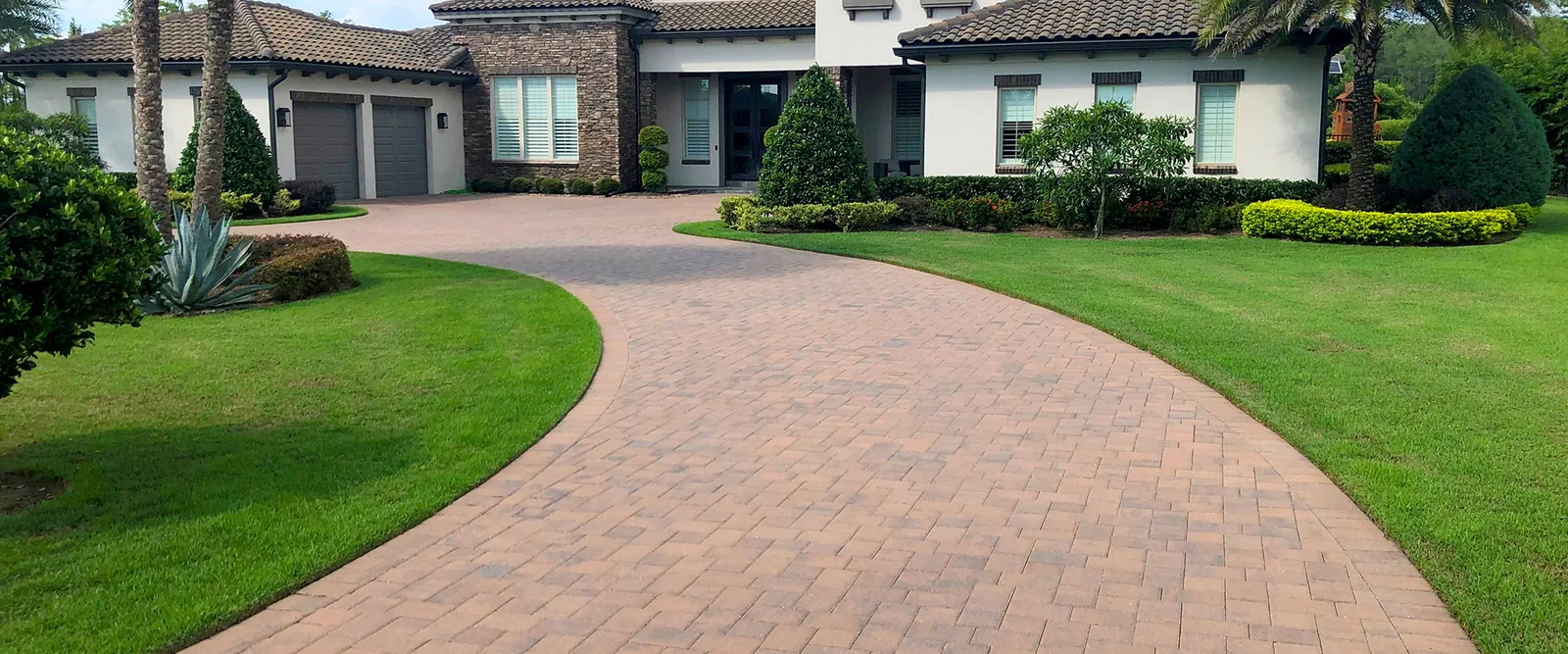
Florida Heat and Thermal Expansion
A poured concrete driveway or patio goes down as one large slab, usually split into a few sections by control joints. Florida sun heats the surface fast, and the material expands and contracts with it, day after day, season after season. The control joints are supposed to absorb that movement, but the slab on either side of them is still rigid — so cracks tend to show up right along those joints anyway, and once one starts, it keeps traveling.
Pavers are built around movement from the start. Instead of one continuous surface, you have hundreds of small units set close together with sand packed into the joints between them. That sand joint is the give — it lets each paver shift a hair with heat instead of forcing the whole surface to fight itself as one piece.
Summer Rain and Where the Water Goes
Central Florida's afternoon downpours are heavy, fast, and close to a daily event for months at a time. A poured slab depends entirely on the slope built into it at pour time. If that slope is even slightly off, or the ground underneath settles later and throws it off, water pools on the surface instead of running away from the house — and standing water on a driveway or patio doesn't dry out fast in Florida humidity.
Paver joints work differently. Water moves down through the sand-filled joints into the compacted base underneath, then drains through that base instead of relying on the surface slope alone. A properly built base handles a Florida downpour instead of just holding it on top until the sun does the work.
What's Moving Underneath: Sandy Soil and Palm Roots
Much of Central Florida sits on sandy soil. It drains well, but it also shifts and settles unevenly — especially in yards where the ground was disturbed by past construction, irrigation lines, or just years of the wet-dry cycle this state runs on. A concrete slab is one rigid piece. If the ground under any part of it settles, even a little, the slab can't bend to follow — it cracks along a stress line, and that crack doesn't stay small.
Palm trees are everywhere in Central Florida yards, and their roots run shallow, searching for moisture close to the surface — sometimes right under a driveway or walkway edge. A root pushing up against a concrete slab has nowhere to go but through it. With pavers, that same section can be lifted, the base adjusted or the root routed around, and the same pavers reset in place. It solves the actual problem at the actual spot instead of cracking a twenty-foot slab over a root the size of your wrist.
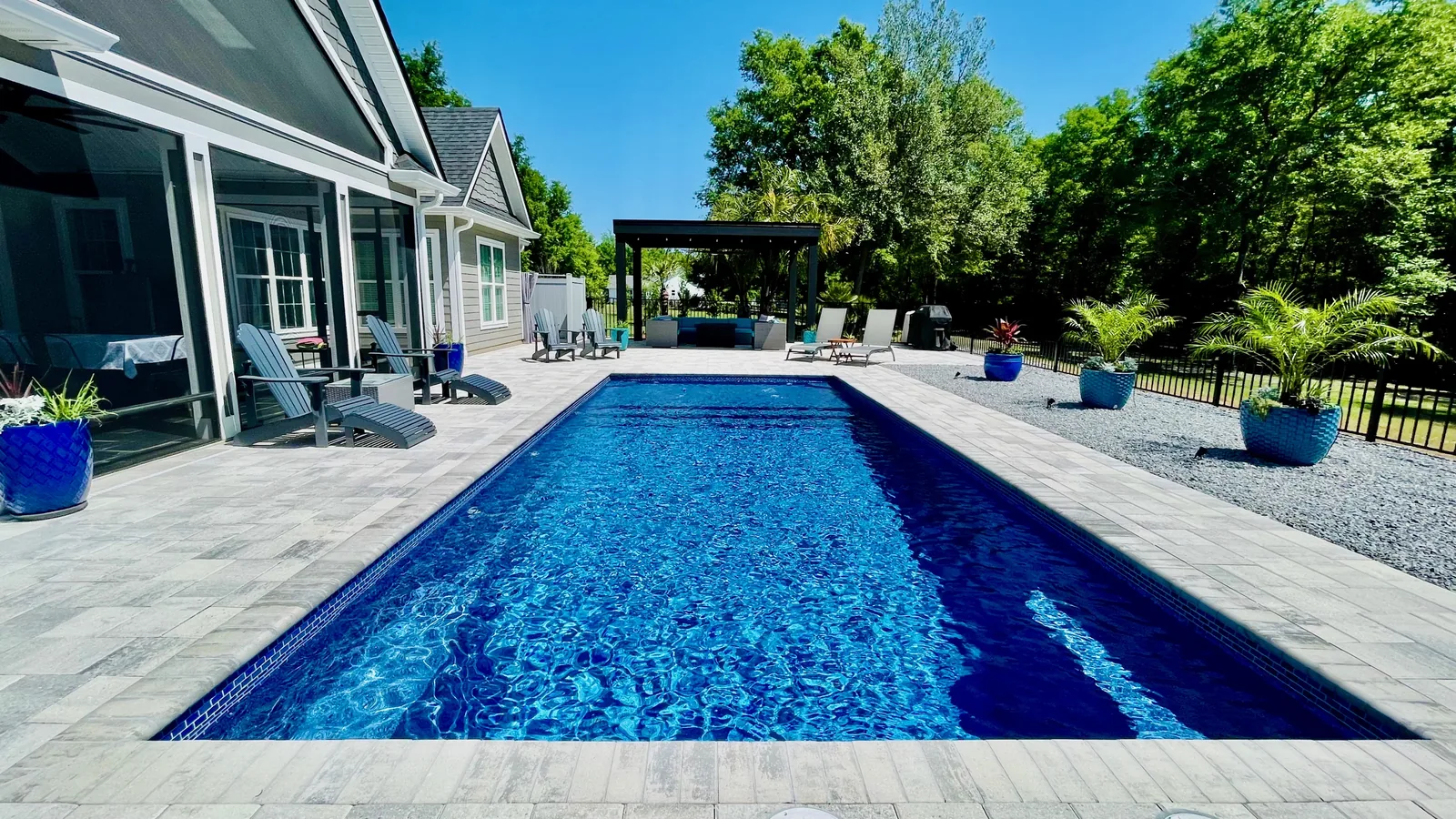
Stains, Mold, and the Humidity Problem
Florida humidity plus shade makes mold and algae on outdoor hardscape a normal part of living here — it's the climate, not a defect in either material. The difference is what happens next. Concrete is porous, so oil, rust, tannins from tree debris, and mold soak into the slab itself and blotch it permanently in patches. Pressure washing helps, but a stain that's set into bare concrete tends to come back.
Pavers get pressure washed as a normal part of the job, not a rescue attempt, and their color runs through the material rather than sitting on a painted or sealed surface. If one paver does stay stained or gets cracked, it can be pulled and swapped for a matching one — no patch of new material sitting next to years of weathered concrete with a color line between them.
When It Actually Cracks: Patch Job vs. Full Reset
This is the difference that matters most once damage has already happened. With concrete, a crack means saw-cutting out the damaged section, breaking it up, hauling off the debris, forming it again, pouring, and then waiting for it to cure before anyone can walk or park on it. The patched section rarely matches the surrounding concrete's color exactly, so you're looking at the repair for years afterward.
With pavers, the ones over the damaged spot get lifted, the base underneath gets fixed — which is usually the actual cause, not the paver itself — and the same pavers go back down. No demolition, no curing time, no mismatched patch. That lift-and-reset approach, using pavers manufactured here in Florida, is the core reason a paver surface stays repairable instead of becoming a redo.
How to Decide
- A single hairline crack with no separation, and water still drains fine — patching the concrete and watching it is a reasonable move.
- Multiple cracks, stains that won't wash out, or water pooling after rain — that's usually a settling or drainage problem the surface is showing you, not something a patch fixes for good.
- Want the option to fix a spot without ever redoing the whole surface, even years from now — pavers are built to be lifted and reset rather than broken and repoured.
- Small, low-traffic area and budget is the only concern right now — a concrete patch can be the practical short-term move. Just go in knowing what you're buying.
We install Flagstone Pavers — made in Brooksville, Florida.
Have a driveway, patio or pool deck you're trying to decide about? Send a couple photos or just call — free estimate, no pressure.